Brick Paver Cleaning
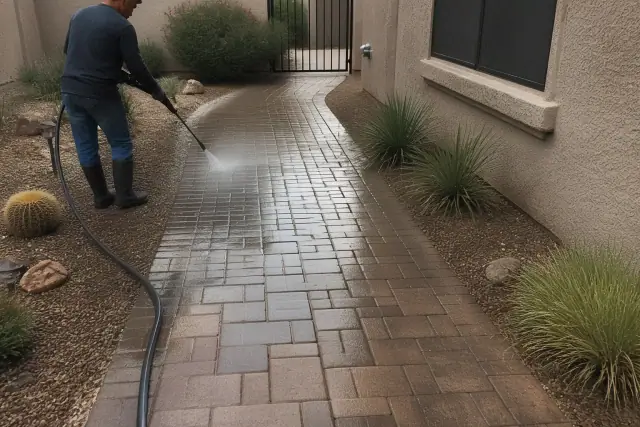
Clay brick pavers can collect irrigation rust, tire marks, and embedded dirt. A controlled hot-water rinse with a surface-cleaner head lifts buildup without rounding the brick edges.
Request Estimate
Phoenix Pressure Washers provides paver cleaning and sealing for Phoenix properties, with service for brick, concrete, travertine, flagstone, and slate surfaces. We clean driveways, pool decks, patios, and commercial paver areas before matching the sealer to the material and how the space is used. Available finishes include wet-look gloss, matte, penetrating, and slip-resistant options. Our service extends throughout Phoenix and the surrounding metro.
Phoenix receives more than 300 days of direct sun a year, while hard well and canal water can leave mineral haze on outdoor pavers. Unsealed surfaces can absorb pool chemicals, sunscreen oil, and irrigation minerals within a single monsoon season. We adjust cleaning chemistry, dwell time, and pressure to the paver material so embedded grime can be lifted without eroding soft stone or blasting joint sand away. Correct preparation also keeps dirt, oil, and moisture from being trapped beneath a new coating.
Hot- and cold-water pressure washing systems, rotary surface cleaners, targeted stain treatments, joint-sand work, and a material-matched sealer give each restoration a complete foundation. We inspect the surface first and provide a written estimate before work begins.
Phoenix Pressure Washers provides paver cleaning and sealing throughout Phoenix and the surrounding metro, including Scottsdale, Tempe, Mesa, Chandler, Glendale, and Paradise Valley.
Paver restoration is a two-part service: the surface and joints are cleaned correctly first, then a sealer is selected for the paver material and the way the area is used.
Mechanical cleaning and targeted chemical treatment remove embedded dirt, oil, organic growth, rust, and efflorescence before the surface is allowed to dry completely.
The final sealer may be water-based, solvent-based, acrylic, polyurethane, or penetrating, with the finish chosen for color, sheen, moisture movement, traction, and traffic.
Cleaning restores the surface before sealing adds protection appropriate to the material, finish, and exposure. Together, those steps address both appearance and the joint conditions that help a paver installation stay stable.
Different paver materials and property uses call for different cleaning agents, pressure settings, stain treatments, and sealer finishes. Our service plan starts with the surface in front of us rather than a one-pressure-fits-all approach.
Clay brick pavers can collect irrigation rust, tire marks, and embedded dirt. A controlled hot-water rinse with a surface-cleaner head lifts buildup without rounding the brick edges.
Request Estimate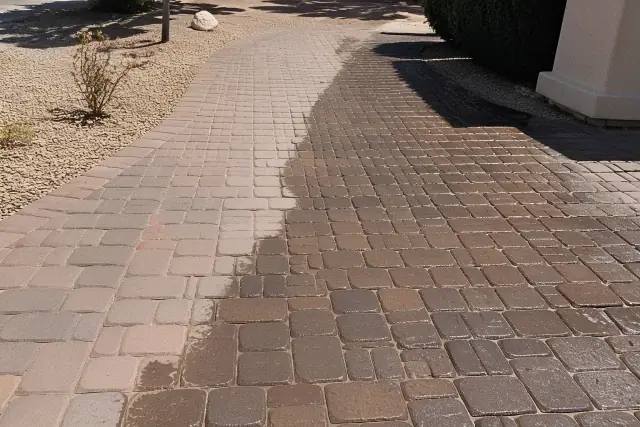
Porous concrete pavers absorb oil and organic staining quickly. After cleaning, a penetrating or acrylic sealer can be matched to the desired finish and future exposure.
Request Estimate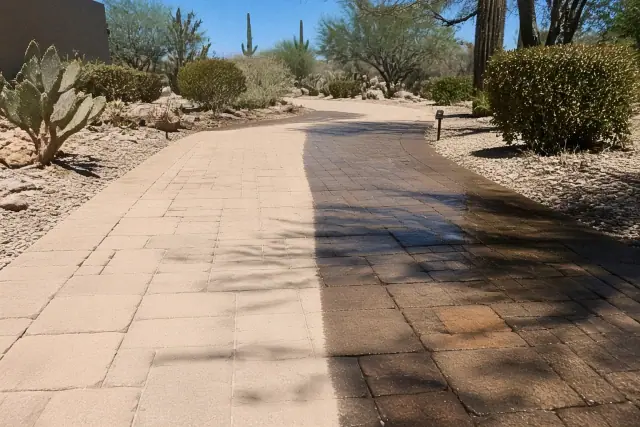
Travertine is calcium carbonate stone that can be etched by acidic cleaners or damaged by high pressure. We use pH-neutral cleaning, low-pressure rinsing, and a breathable penetrating sealer that will not trap moisture in the natural pitting.
Request Estimate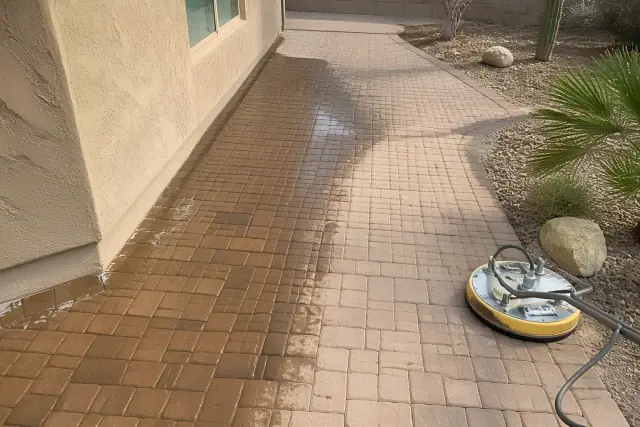
Flagstone and slate can chip or flake under aggressive pressure. Chemical cleaning agents and a soft-wash technique provide a gentler foundation before a compatible sealer is applied.
Request Estimate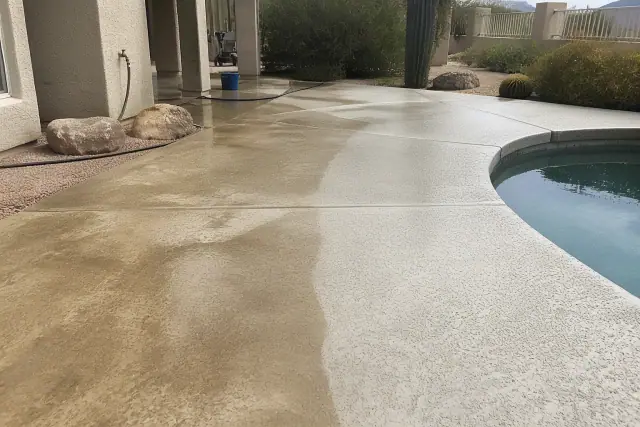
Pool decks may need algaecide treatment for irrigation-fed growth, while covered patios often need separate degreasing around outdoor kitchens and BBQ areas. Pool-deck sealer receives a slip-resistant additive rather than a high-gloss-only finish.
Request Estimate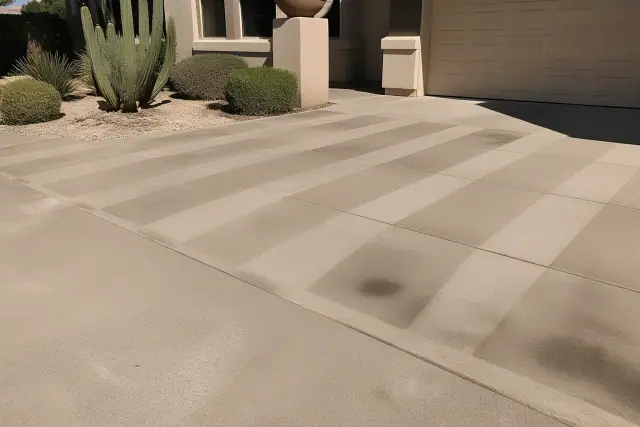
Driveways and commercial paver areas take heavier traffic, oil staining, and tire-rubber transfer. Citrus-based degreaser and multiple treatment passes may be needed before a clean, stable surface is ready for sealing.
Request EstimateSealer selection depends on paver material, moisture movement, traffic, drainage, desired sheen, and whether the surface becomes wet underfoot. The right product is applied only after cleaning, joint work, and complete drying.
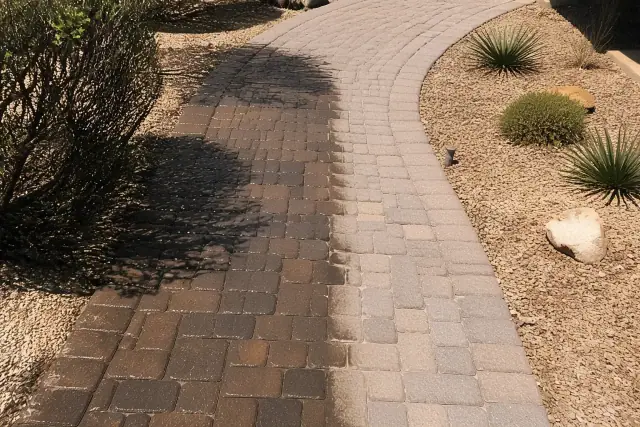
Penetrating, non-film-forming sealers protect within the paver while allowing moisture and drainage to remain part of the surface design. They are especially relevant to moisture-sensitive stone and permeable installations.
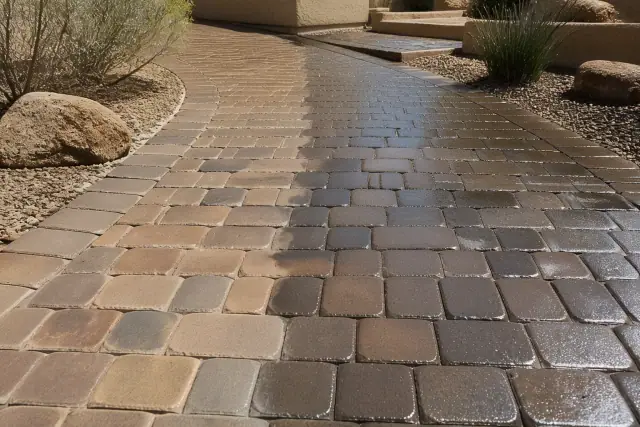
A wet-look, film-forming sealer deepens paver color and adds visual depth to entertaining areas. Surface use still matters, because wet walking areas need traction rather than gloss alone.
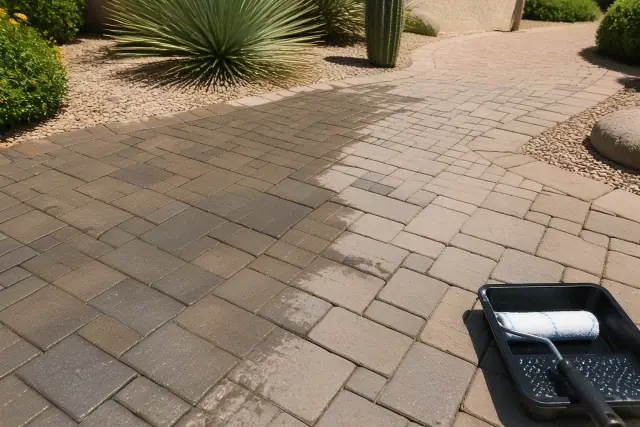
A matte finish provides protection without the darker, glossy appearance of a wet-look coating. Product selection is still matched to material, exposure, and the need for a breathable or film-forming result.
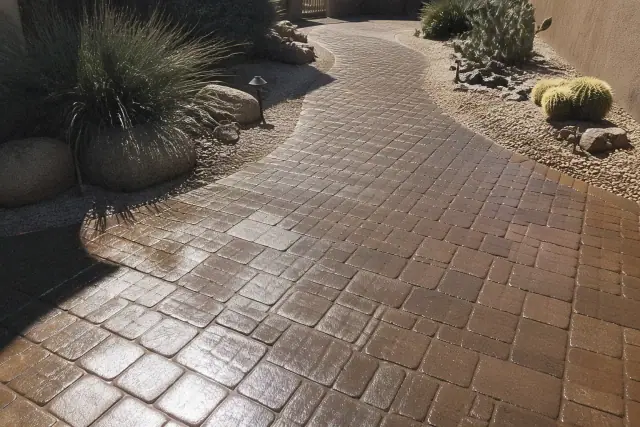
Acrylic paver sealing and polyurethane paver coatings create film-forming finishes. The product may be sprayed or rolled in controlled sections to keep the film thickness consistent.
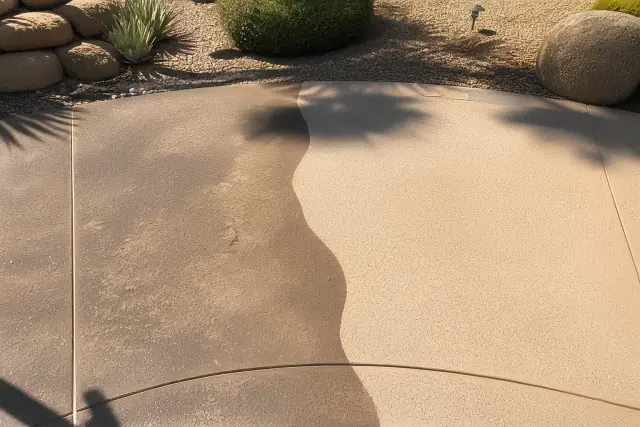
Pool decks and wet walkways need traction built into the finish. A slip-resistant additive is included on pool-deck work regardless of paver material so the sealer choice is not based on appearance alone.
A successful restoration plan accounts for the paver material, stains, joint condition, drainage design, traffic, sun exposure, desired appearance, and cure window. Those factors determine how the surface is cleaned, whether sand is replaced, and which sealer and finish are appropriate.
Brick can tolerate a different cleaning approach than travertine, flagstone, or slate. We match the cleaning agent, dwell time, water temperature, and pressure setting to the actual surface instead of treating every paver the same.
Dry heat often supports curing, but surface temperature, humidity, and storm risk still matter. We avoid sealing during active monsoon weather from July through September and plan the application for a dry cure window.
Inspection identifies cracks, loose units, and missing joint sand before a finish is chosen. The plan can then account for polymeric-sand replacement where appropriate, wet-look or matte appearance, pool-deck traction, and breathable protection for stone or permeable pavers.
Our restoration work combines hot- and cold-water equipment, calibrated surface cleaners, hand-detailing, targeted chemical treatment, joint evaluation, and finish-specific application. We follow Interlocking Concrete Pavement Institute guidance for joint sand and maintenance intervals, and our crews are trained on Arizona Registrar of Contractors standards for surface preparation and chemical handling.
Request Paver AssessmentMineral-heavy water can leave white efflorescence on concrete and travertine, especially near pool coping and irrigation lines. We use a specialized efflorescence remover because the wrong chemical can permanently etch the paver face.
Irrigation overspray can feed green algae on shaded pool decks, while limited airflow encourages mildew on covered patios. Treatment reaches the visible paver face and organic growth in the joint sand before the surface is rinsed.
Driveways collect oil and tire transfer, while patios can hold grease from outdoor cooking areas. Targeted degreasers, a poultice when appropriate, and repeated treatment passes address these stains before sealing can lock them in.
Direct sun, fertilizer overspray, tire marks, and years of embedded soil can leave pavers flat, gray, or uneven in color. Cleaning removes treatable buildup, while a color-enhancing sealer can deepen the original tone and add a layer of UV protection.
Missing joint sand lets pavers shift and opens space for weeds and ants. Phoenix summer weeds can push through unsealed joints within weeks of the first rain, so we inspect and refill joints with polymeric sand where appropriate before sealing.
Sealing damp or dirty pavers can trap moisture, oil, and organic growth beneath a hazy film. Skipping joint repair or sand top-off is also a common reason DIY sealing can fail within a year and require a full strip and restart.
Each job moves from inspection and stain treatment through controlled cleaning, joint preparation, sealing, and curing. The sequence protects the final finish from contaminants, uneven sand, and trapped moisture.
We identify the paver material, cracks, loose units, lost joint sand, stains, traffic, drainage needs, and desired finish. The findings support a written estimate before work begins.
Oil, rust, grease, algae, mildew, organic growth, and efflorescence receive the appropriate pretreatment. Chemistry and dwell time are adjusted to the paver so cleaning does not etch or strip the surface.
A calibrated rotary surface cleaner covers the main area, with hot or cold water selected for the material and stain. Edges and joints are hand-detailed before the entire surface is rinsed and checked at its dry appearance.
The pavers must dry completely before sealing. Cracks or loose units are flagged, and lost joint material is topped off with polymeric sand where appropriate so the sealer bonds above a stable surface.
The selected sealer is sprayed or rolled in sections to maintain an even film thickness. For most film-forming sealers, two thin coats are standard to avoid pooling and a hazy finish.
Sealant can need up to 48 hours to cure fully depending on humidity and surface temperature. We recommend an annual check, with a maintenance recoat typically needed after one to three years based on traffic and sun exposure.
Tell us whether you are dealing with stains, fading, algae, efflorescence, loose sand, or a worn coating. We will inspect the paver material and condition, discuss finish and traction needs, and provide a written estimate for the recommended work.
These answers cover Phoenix paver pricing, preparation, sealer selection, curing, maintenance, and material-specific care. A surface inspection is the best way to match the process to your pavers and property use.
Call Paver SpecialistsPaver cleaning and sealing in the Phoenix market averages around $413 for a typical residential job, with most projects between $207 and $620 depending on square footage and condition. Sealing alone generally runs $1 to $3.50 per square foot, while full-service cleaning with stain removal and joint repair can cost two to five times that rate. Larger driveways and pool decks covering 500 to 800 square feet often fall between $449 and $899; Phoenix Pressure Washers provides a written estimate after inspecting the surface.
Sealing is generally more affordable than removing and reinstalling damaged pavers, and many standard patios or driveways cost a few hundred dollars. Final expense depends on square footage, sealer type, surface condition, and whether cracked or loose pavers need work before sealing.
A film-forming sealer can darken paver color and add gloss, which is not the look every property owner wants. Poor preparation can trap dirt or moisture, wet surfaces can become slippery without the right additive, and the coating requires periodic reapplication rather than serving as a one-time treatment.
Yes. Sealing over dirt, algae, oil residue, or efflorescence traps those contaminants beneath the coating, and stripping the sealer may be the only way to correct it. A full mechanical and chemical cleaning pass followed by complete drying helps prevent DIY-style failures within months.
Most professional-grade sealers need a maintenance recoat after one to three years in Phoenix. High-traffic driveways and pool decks tend toward the shorter end because of UV exposure and use, while routine cleaning can extend the life of the existing coat.
Spring and fall provide the most reliable combination of moderate surface temperatures and lower storm risk. Winter sealing is also possible, but active monsoon weather should be avoided so sudden rain does not interrupt the cure.
Rinse away dust and organic debris, spot-clean oil or fertilizer spills promptly, and keep joint sand topped off. Avoid harsh acidic cleaners on natural stone because they can strip sealer or etch the material, and arrange an annual inspection to catch early wear or efflorescence.
Service is available for brick, concrete, travertine, flagstone, slate, and permeable paver systems. Cleaning pressure, chemistry, and sealer formulation must be matched to the material so soft stone is not etched and drainage joints are not clogged.
Paver sealant can need up to 48 hours to cure fully depending on humidity and surface temperature. Phoenix dry heat may shorten that window, but the application still needs protection from rain and use until the product has set.
Options include wet-look gloss, matte, penetrating, acrylic, polyurethane, water-based, and solvent-based formulations. The right choice depends on the material, desired color and sheen, moisture movement, traffic, drainage, and whether the surface needs added slip resistance.
Sealing can lock properly restored joint sand in place, which reduces open space for weeds and ants. Loose or missing material should be replaced with polymeric sand where appropriate before sealing so shifting pavers are not covered without addressing the joint condition.
Pool-deck sealer receives a slip-resistant additive regardless of the paver material. The coating and finish are chosen for a wet walking surface rather than applying a high-gloss product based on appearance alone.
Yes, when a breathable, non-film-forming product is selected for the installation. The sealer must keep the joint gaps open so the permeable system can continue draining water as designed.