Proudly serving Phoenix, Mesa, Scottsdale, Tempe, Chandler, Glendale & surrounding areasCall or Text 24/7: 602-449-0503
Aerial drone view of a desert residential neighborhood in Phoenix, AZ, featuring stucco homes and distant mountains.

Parking Lot & Parking Garage Cleaning for Managed Facilities in Phoenix, AZ

Phoenix Pressure Washers cleans parking lots and parking garages for property managers, HOAs, and business owners across the Phoenix metro. Our commercial services include hot-water pressure washing, stain removal, sweeping preparation, and recurring maintenance. We clean both asphalt lots and concrete garage decks with methods selected for the surface. Large-format surface cleaners help lift bonded grime evenly without relying on an improperly adjusted wand.

Phoenix pavement surface temperatures regularly exceed 150 degrees Fahrenheit in summer, baking oil, transmission fluid, and rubber into exposed lots. Monsoon dust adds fine silt that sweeping alone cannot remove. Hot-water systems operating near 200 degrees Fahrenheit emulsify grease while surface cleaning attachments distribute pressure across the pavement. Water reclamation practices keep contaminated wash water out of storm drains in line with Arizona Department of Environmental Quality guidance and City of Phoenix stormwater ordinances.

Monthly, quarterly, seasonal, and annual service schedules can be matched to traffic, tenant access, and soil buildup after an on-site walkthrough.

Phoenix Pressure Washers provides parking lot and parking garage cleaning in Phoenix and across the metro, including Scottsdale, Tempe, Mesa, Chandler, and Glendale.

★ ★ ★ ★ ★4.9/5.0 Customer Rating · 19 Years of Exterior Cleaning Experience · Thousands of Properties Cleaned · Licensed & Fully Insured · Serving Homes, Businesses & HOAs

Parking Lot & Garage Cleaning Benefits

What Is Commercial Parking Surface Cleaning?

Commercial parking surface cleaning combines debris removal, targeted pretreatment, and pressure washing to remove material bonded to asphalt or concrete. Pressure and nozzle selection are adjusted for the substrate, with wider fan patterns and lower pressure on aged asphalt and rotary surface cleaning on cured concrete.

Parking garage cleaning extends beyond the driving slab to ramps, stalls, column bases, expansion joints, and drain grates. Level-by-level work removes tire rubber, oil, brake dust, and exhaust residue while keeping the structure usable around planned closures.

The service can be scheduled for heavily soiled gas stations and grocery anchors, seasonal office-park cleaning, or recurring maintenance. Each job is planned around soil level, drainage, ventilation, traffic, and the condition of the surface.

Benefits of Professional Parking Surface Cleaning

A surface-specific process improves appearance while addressing the contaminants and maintenance concerns that sweeping leaves behind. Properly maintained asphalt can last 20 to 30 years, while neglect and improper cleaning can cut that lifespan roughly in half.

  • Lifts embedded oil, grease, rubber, and traffic film
  • Uses pressure patterns suited to aged asphalt or cured concrete
  • Clears sediment from garage joints, columns, and drain grates
  • Reveals lane markings and directional arrows hidden by grime
  • Prepares clean, dry surfaces for striping or sealant work
  • Contains wash water and dissolved contaminants
  • Matches cleaning frequency to traffic and seasonal buildup
  • Supports a cleaner arrival experience for customers and tenants
Commercial Surface Care

Parking Lot & Garage Cleaning Services

Choose a one-time deep cleaning, stain-focused treatment, or recurring maintenance plan based on the property. Service can cover open asphalt lots, multi-level concrete structures, drive-thru lanes, loading zones, dumpster pads, and the detailed areas around garage decks.

Commercial Parking Lot Pressure Washing

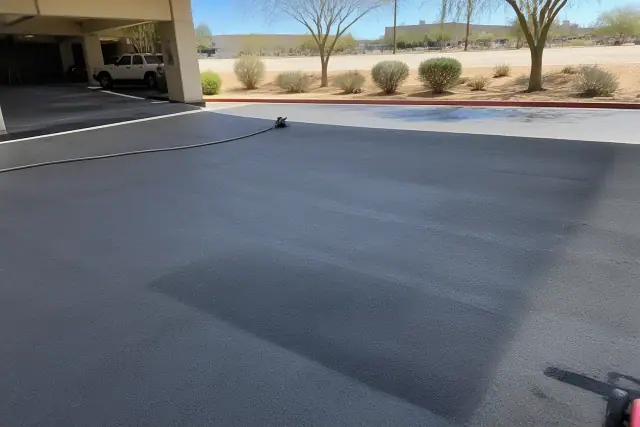
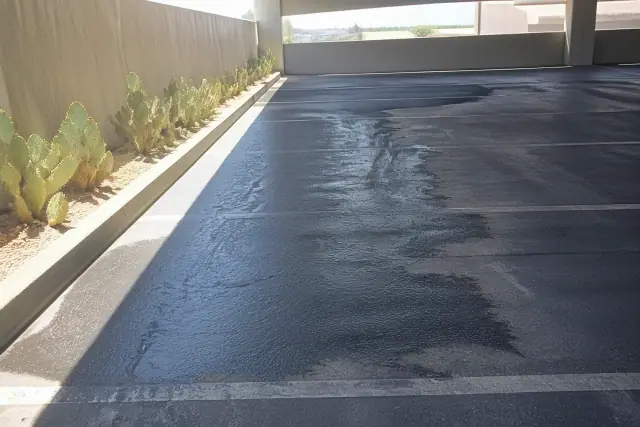
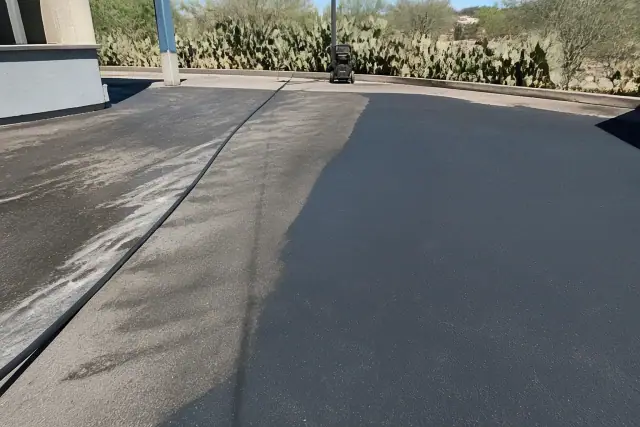
Asphalt parking lot in Phoenix, AZ after pressure washing to remove oil stains, with prickly pear cacti in the sunlight.

Hot-water pressure washing and large-format surface cleaning attachments remove bonded traffic film from asphalt and concrete lots. Flow, dwell time, fan pattern, and pressure are adjusted to clean efficiently without gouging the substrate or stripping sound sealcoat.

Request Estimate

Multi-Level Parking Garage Cleaning

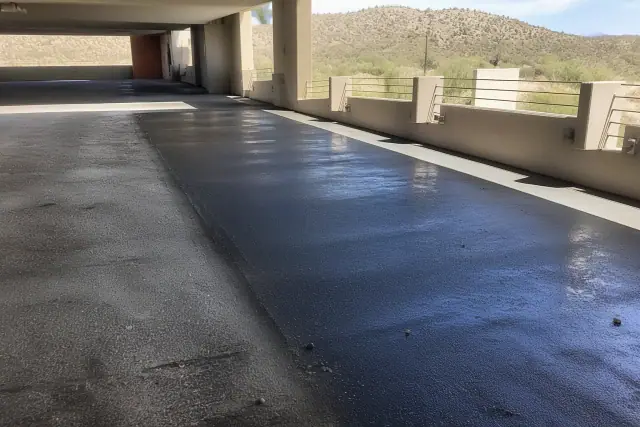
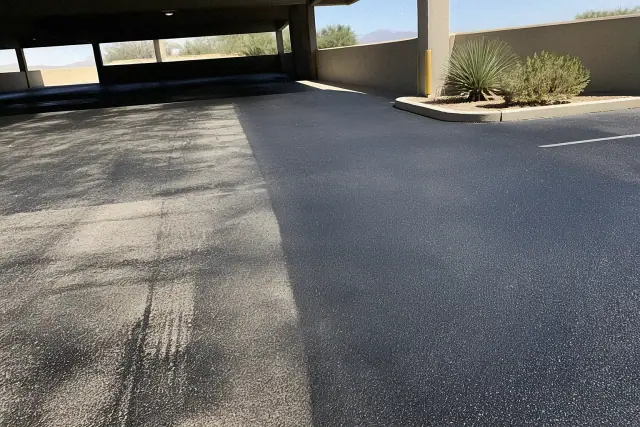
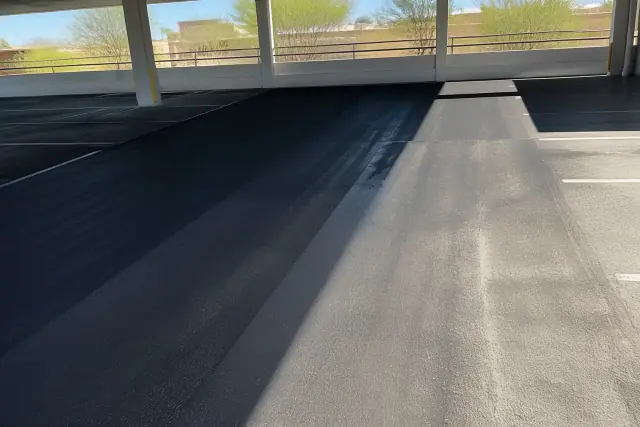
Cleaned asphalt surface in a multi-level parking garage in Phoenix, AZ, showing removed oil and tire marks.

Garage decks are cleaned level by level around tenant parking and planned closures. The scope can include stalls, drive lanes, ramps, column bases, expansion joints, and drain grates, with attention to airflow in enclosed or semi-enclosed areas.

Request Estimate

Oil, Grease & Tar Stain Treatment

Cleaned oil and tire stains on an asphalt parking garage surface in Phoenix, AZ.

Fresh oil can be absorbent-pretreated before hot-water extraction, while heat-baked stains may require a degreaser dwell period and a second pass. Citrus degreasers are used for tar and grease spots where a harsh solvent could damage sealcoat.

Request Estimate

Sweeping and Debris Preparation

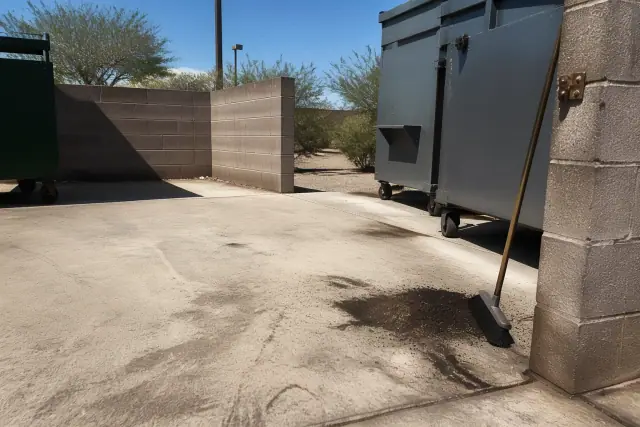
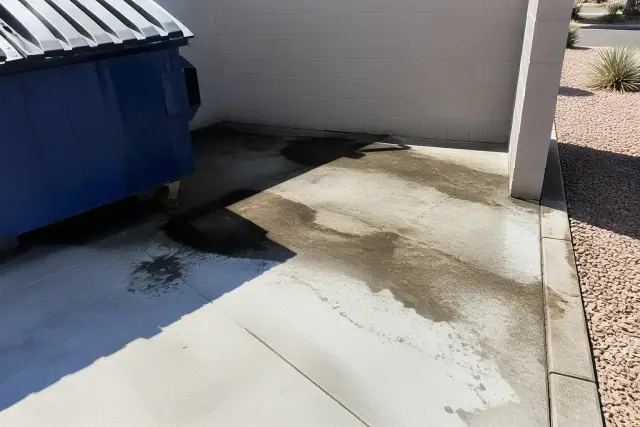
A commercial dumpster pad in Phoenix, AZ, showing grease removal and a pile of swept debris on concrete.

A preliminary sweep removes trash, loose gravel, and organic debris before water cleaning begins. This two-step approach avoids redistributing debris, protects surface-cleaning equipment, and shortens wash time on larger properties.

Request Estimate

Garage Floor Degreasing and Sealant Application

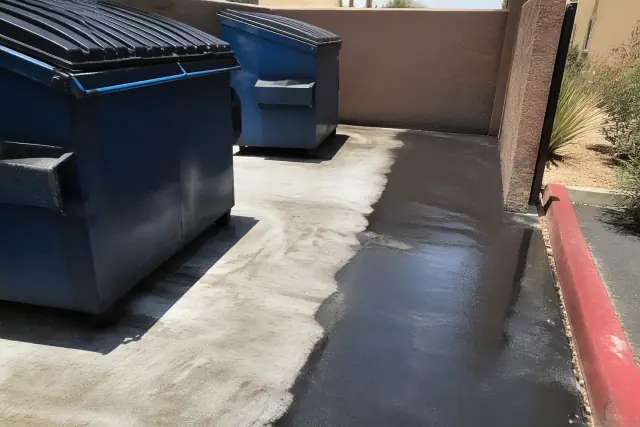
Cleaned concrete dumpster pad with freshly applied sealant at a commercial site in Phoenix, AZ.

Alkaline degreasers are agitated into concrete pores before hot-water extraction on decks with heavy oil buildup. Once the surface is clean and dry, sealant can be applied to reduce future moisture and oil penetration.

Request Estimate

Recurring Maintenance and Emergency Cleanup

Concrete parking lot dumpster area being cleaned of grease and grime in the bright midday sun of Phoenix, AZ.

Monthly service can keep high-traffic retail and restaurant lots ahead of oil buildup, while quarterly or annual cleaning can suit lower-traffic or pre-inspection needs. Emergency cleanup is also available after chemical spills or vandalism.

Request Estimate
Cleaning Methods

Options for Commercial Parking Surfaces

The right cleaning plan depends on the surface, contaminant, property layout, and timing. These options can be combined to address everyday traffic film, concentrated stains, seasonal dust, garage details, and post-cleaning maintenance needs.

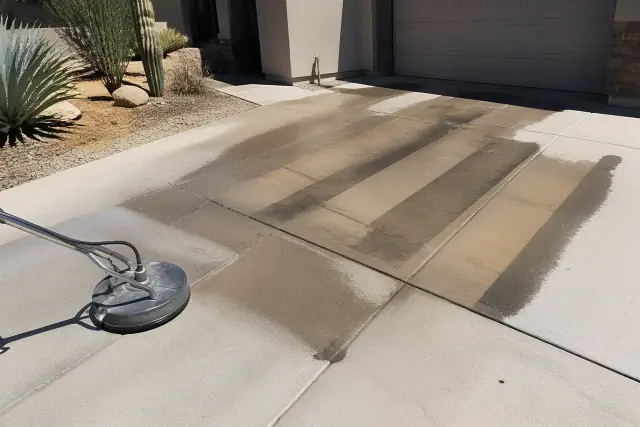
Clean stripes from a surface cleaner on a concrete driveway in Phoenix, AZ.

Surface-Calibrated Pressure Washing

Pressure, flow rate, nozzle pattern, and dwell time are selected for asphalt or concrete rather than using one setting everywhere. On a 500-space lot, even coverage and flow matter more than simply maximizing PSI.

  • Lower pressure on aged asphalt
  • Wider fan patterns to reduce aggregate raveling
  • Rotary surface cleaning on cured concrete
  • Hot water near 200 degrees Fahrenheit for grease
  • Controlled pressure around sealcoat and cracks
Request Estimate
Spot treatment of oil stains on a Phoenix, AZ parking garage asphalt surface with nearby prickly pear cacti.

Targeted Stain and Spot Treatment

Different stains require different chemistry and contact time. Pretreatment breaks the bond before calibrated pressure washing removes the residue from the underlying surface.

  • Absorbent pretreatment for fresh oil drips
  • Degreaser dwell time for heat-baked oil
  • Citrus degreasers for tar and grease spots
  • Surface-specific chemistry for rust and efflorescence
  • Calibrated treatment for graffiti near alley entrances
Request Estimate
Cleaned asphalt parking garage surface after oil and tire mark removal in Phoenix, AZ.

Parking Garage Deck Care

Concrete decks generally outlast asphalt by 2 to 2.5 times when properly maintained, but oil, sediment, and chloride residue can accelerate spalling. Detailed garage cleaning addresses both the traffic surface and the places where contamination collects.

  • Separate treatment for drive lanes and parking stalls
  • Degreasing on ramps with concentrated oil
  • Sediment removal at joints and drain grates
  • Cleaning around column bases and open bays
  • Ventilation monitoring in enclosed areas
Request Estimate
Cleaned asphalt surface in a Phoenix, AZ parking garage showing the contrast between removed stains and pavement.

Seasonal and Recurring Maintenance

Cleaning frequency can follow actual traffic and Phoenix weather patterns. Monsoon season, roughly July through September, brings fine dust and organic debris, while spring pollen and haboob residue create different buildup.

  • Monthly care for busy retail and restaurant lots
  • Quarterly cleaning for lower-traffic properties
  • Annual cleaning for inspections or sealcoating prep
  • Seasonal cleaning around monsoon and spring buildup
  • Emergency response after spills or vandalism
Request Estimate
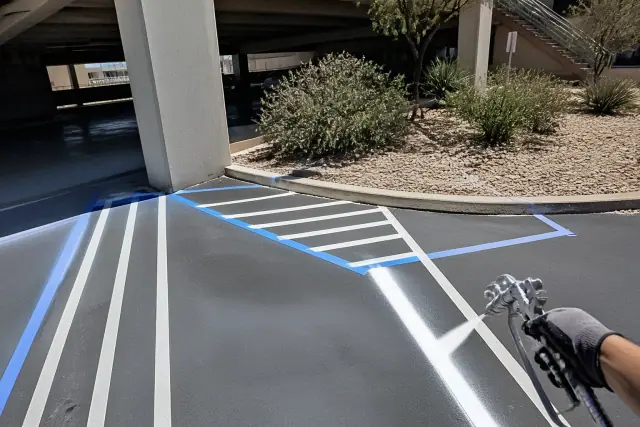
Contractor preparing parking lot striping and access aisles on an asphalt surface in Phoenix, AZ.

Striping and Access-Aisle Preparation

Cleaning can reveal whether markings are worn or merely hidden beneath grime. After the surface dries, a striping contractor can work from a clean base, and property managers can address visibility issues tied to the 2010 ADA Standards for Accessible Design.

  • Clean first to evaluate faded markings accurately
  • Remove traffic film from lane lines and arrows
  • Let the surface dry before restriping
  • Flag faded accessible signage and access aisles
  • Coordinate closures around vehicle and pedestrian traffic
Request Estimate
Finding Your Right Fit

Choosing the Right Cleaning Approach

A walkthrough identifies the pavement type, stain load, drainage, garage ventilation, traffic patterns, and access limits that shape the work. The resulting plan can combine sweeping, pretreatment, hot-water cleaning, recovery, and a maintenance interval suited to the property rather than applying the same method everywhere.

Surface-Calibrated Cleaning

Crews adjust nozzle selection, fan pattern, pressure, flow, and chemistry for the underlying surface. This protects aged asphalt, cured concrete, sealcoat, and vulnerable cracks while still addressing bonded contamination.

Wash-Water Recovery

Vacuum capture and water recovery keep wash water and dissolved contaminants out of Phoenix storm drains. The approach aligns the cleaning process with state guidance and local stormwater requirements for commercial sites.

Commercial Scheduling

Work is coordinated around tenant parking, open ramps, business traffic, and deck closures. Level-by-level sequencing helps avoid trapping vehicles while keeping the approved cleaning area clear for equipment and recovery.

What Sets Us Apart

Why Choose Us for Parking Surface Cleaning?

Phoenix Pressure Washers combines hot-water equipment, large-format surface cleaners, stain-specific chemistry, and water recovery in one property-focused process. Scheduling is built around commercial access, and the final walkthrough confirms that treated stains, debris, and wash water have been addressed before the crew leaves.

Request a Property Walkthrough

Heat-Baked Oil Stains

Motor oil, transmission fluid, and diesel drips bond quickly to Phoenix pavement under intense summer heat. Older stains often need pretreatment and dwell time before hot-water cleaning, with a second pass when the residue has penetrated deeply.

Tire Marks and Brake Dust

Drive lanes, ramps, and stalls collect rubber and brake dust with every vehicle movement. These residues create a dark traffic film that routine sweeping cannot lift from garage concrete or busy retail lots.

Monsoon Silt and Debris

Dust storms spread fine silt and organic debris across open lots throughout the Salt River Valley. Once traffic works that material into the surface, a leaf blower or routine sweep may remove the loose layer but leave the bonded film behind.

Dirty Joints and Drains

Column bases, expansion joints, and drain grates collect oil and sediment away from the broad deck surface. Leaving that buildup in place can contribute to moisture intrusion and rebar corrosion in garage structures exposed to wide seasonal temperature swings.

Surface-Specific Stains

Rust from irrigation heads, efflorescence on concrete, tar, and graffiti do not respond to one universal cleaner. Matching the chemical treatment and pressure to the stain and substrate helps remove the mark without creating avoidable surface damage.

Obscured Parking Markings

Grime can hide lane lines, directional arrows, accessible spaces, and access aisles that are still physically present. Cleaning first separates a visibility problem from genuinely worn striping and gives property managers a clear base for deciding what needs repainting.

How it works

Our Parking Surface Cleaning Process

Each project moves from property assessment through debris removal, stain treatment, washing, recovery, and inspection. The sequence is adjusted for open lots or garage decks while preserving safe access and keeping contaminated water away from storm drains.

01.

Property Walkthrough and Scheduling

The crew reviews surface type, stain concentration, drainage, traffic, ventilation, and vehicle access with property management. Work areas and level closures are then sequenced around the site's operating needs.

02.

Debris Sweep and Lot Preparation

Loose trash, gravel, dust, and organic debris are swept before washing. This clears the surface for stain inspection and prevents the water-cleaning equipment from simply moving debris around the property.

03.

Stain-Specific Pretreatment

Oil, grease, tar, rust, efflorescence, and graffiti are identified before the wash begins. The appropriate absorbent or chemical treatment is applied with enough dwell time to break the bond without using unnecessarily harsh chemistry.

04.

Hot-Water Surface Cleaning

Hot water, controlled pressure, and surface-cleaning attachments lift bonded contamination across asphalt or concrete. Ramps, stalls, drive lanes, column bases, and other details are cleaned according to their soil load and substrate.

05.

Water Recovery and Ventilation

Wash water and dissolved contaminants are vacuum-captured rather than released to storm drains. In enclosed and semi-enclosed garages, equipment placement near open bays and ramps supports airflow while the work proceeds.

06.

Final Inspection Walk

The crew completes a final walkthrough with the property manager to review treated stains, debris removal, and the cleaned surface. Visible striping or signage concerns can also be flagged for the property team to address.

Plan Your Cleaning

Schedule a Parking Surface
Cleaning
Walkthrough

Tell us whether you manage an open lot, garage deck, drive-thru, loading zone, or mixed commercial property. We will review the surface, stains, access, and maintenance goals before preparing an estimate based on actual conditions.

Commercial Cleaning Help

Parking Lot & Garage Cleaning FAQs

Review common questions about pricing, cleaning frequency, stains, garage access, surface protection, water recovery, and related preparation for Phoenix commercial properties.

Call About Your Property

Parking lot pressure washing in the Phoenix market typically runs $0.10 to $0.25 per square foot, depending on soil level, surface type, and whether degreasing or stain treatment is required. A property walkthrough allows Phoenix Pressure Washers to quote the conditions actually present.

Sweeping-only service on a roughly 500-space lot runs in the $70 to $84 range per visit in the Phoenix market. Smaller or obstacle-heavy lots may be priced at around $45 to $75 per hour, while pressure washing and stain treatment are quoted separately by the property's actual conditions.

Parking garage cleaning generally uses the same rough $0.10 to $0.25 per-square-foot market range as parking lots. Access, ventilation, drainage, water containment, ramp staining, and the amount of degreasing can move a multi-level structure toward the higher end.

High-traffic retail and restaurant lots often benefit from monthly attention, while lower-traffic office or storage properties may fit quarterly or seasonal cleaning. The schedule should reflect traffic volume, tenant mix, oil buildup, and exposure to monsoon dust rather than a single calendar rule.

The process starts with a walkthrough and debris sweep, followed by stain-specific pretreatment, hot-water pressure washing, water recovery, and a final inspection. Surface cleaner attachments distribute pressure across large areas while the settings are adjusted for asphalt or concrete.

Yes. Tire rubber, oil drips, brake dust, exhaust residue, and sediment accumulate continuously on decks, ramps, joints, and drains, so periodic cleaning prevents a much heavier job from building up over time.

Yes. Multi-level structures can be cleaned level by level with closures planned around tenant parking and open ramps. Property management should communicate the approved work zones so vehicles are not trapped on closed decks.

These marks can be treated, but each requires the right chemistry and pressure for the substrate. Fresh oil may use absorbent pretreatment, baked oil needs degreaser dwell time, citrus degreasers can address tar and grease, and rust, efflorescence, or graffiti need surface-specific treatment.

Aged asphalt is cleaned with lower pressure and wider fan patterns to reduce aggregate raveling. Controlled pressure and pH-balanced degreasers help remove contamination without stripping sound sealcoat or opening cracks to water intrusion.

Water recovery and vacuum capture keep wash water and dissolved contaminants out of storm drains. This supports commercial cleaning practices consistent with Arizona Department of Environmental Quality guidance and City of Phoenix stormwater rules.

Monsoon season, roughly July through September, deposits fine dust and organic debris across open lots. Spring pollen and haboob residue create separate buildup, so seasonal timing can follow the property's actual exposure.

Yes. Cleaning can reveal markings that were obscured rather than worn, and a striping contractor needs a clean, fully dry surface for new work. The cleaning visit can also flag faded accessible spaces, access aisles, or signage for the property manager to address.

Yes. Once the concrete deck is clean and dry, sealant application can help limit future moisture and oil penetration. Drive lanes and stalls are evaluated separately because their residue and traffic loads differ.