Proudly serving Phoenix, Mesa, Scottsdale, Tempe, Chandler, Glendale & surrounding areasCall or Text 24/7: 602-449-0503
Guides

Which Is Better for Cleaning My Home: Soft Washing or Power Washing?

Phoenix Pressure Washers matches the cleaning method to the material: soft washing is generally the safer choice for stucco, siding, painted surfaces, roofs, and solar panels, while pressure washing is better for concrete, pavers, pool decks, and other hard, non-porous surfaces. That choice matters in Phoenix because concentrated pressure can etch finishes, crack stucco, or force water behind exterior assemblies.

Quick Summary

  • Use soft washing on stucco, painted siding, roof tile, shingles, and solar panels; it cleans with solution and low pressure instead of impact.
  • Use pressure washing on concrete driveways, pavers, pool decks, parking lots, and dumpster pads that can tolerate mechanical force.
  • Soft washing stays under 500 PSI, while pressure washing typically ranges from 1,500 to 4,000 PSI and must be adjusted for the surface.
  • Many properties need both methods: soft wash the house and pressure wash the hardscape rather than applying one pressure level everywhere.

Which Cleaning Method Fits Each Surface?

Soft Wash Delicate Surfaces

A diluted sodium hypochlorite and surfactant blend breaks down mold, algae, and mildew, dwells for several minutes, then rinses below 500 PSI. This is the lower-impact choice for stucco, painted finishes, roofs, and other vulnerable exterior assemblies.

Pressure Wash Hard Surfaces

Pressure washing uses 1,500 to 4,000 PSI to lift embedded dust, oil, mineral deposits, tire marks, gum, grease, or loose paint from hard, non-porous materials. Distance, angle, nozzle, and PSI determine how aggressively the water cleans.

Match the Method to the Surface

Inspect the substrate and finish, test a small area, and select the method surface by surface. A single property may need low-pressure chemistry on the building and controlled mechanical cleaning on adjacent concrete.

Visual Signs That Guide the Choice

Chalky Stucco and Black Roof Streaks

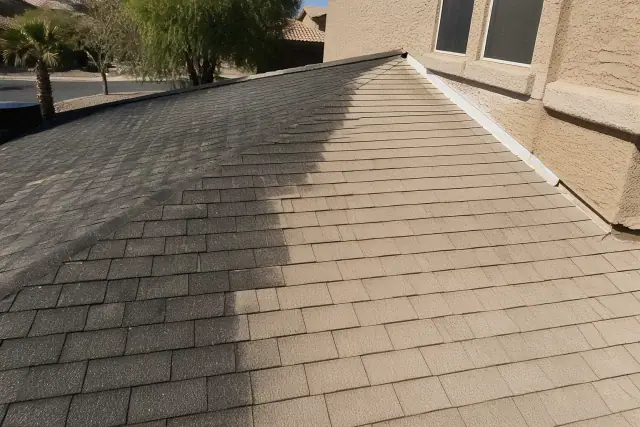
Chalky stucco and black algae streaks on a residential roof in Phoenix, AZ under bright sunlight.

Chalky Phoenix stucco and black streaks on roof tile are both signs that cleaning chemistry matters more than impact. These delicate surfaces call for low pressure to avoid finish and material damage.

Concrete Oil, Dust, and Mineral Stains

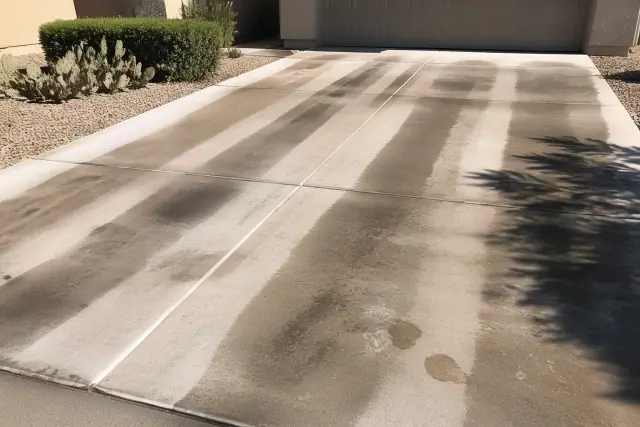
Concrete driveway in Phoenix, AZ showing clean stripes from surface cleaning over oil and mineral stains.

Oil drips, tire marks, fine desert dust, and sprinkler mineral deposits can become embedded in broom-finished concrete. Controlled pressure provides the mechanical cleaning force these hard surfaces can tolerate.

Paver Joints and Pool Deck Finish

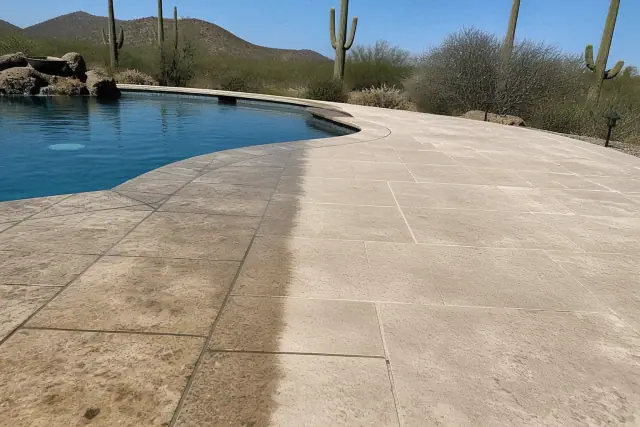
Close-up of paver joints and pool deck finish under bright sunlight in Phoenix, AZ, showing stained and rinsed sections.

Paver joints and textured pool-deck finishes need less force than dense broom-finished concrete. Staying within the lower pressure range helps protect polymeric sand and the finished surface.

Surface-by-Surface Snapshot

Stucco, Siding, and Roofing

Use soft washing under 500 PSI on stucco, painted siding, roof tile, and shingles. It avoids the etching, paint loss, forced water, cracked tile, and shingle-granule loss associated with direct high pressure.

Solar Panels and Painted Trim

Use a low-pressure, non-abrasive wash on solar panels, windows, screens, and painted trim. Panel glass and micro-inverters can be damaged by direct pressure or an unsuitable cleaning agent.

Driveways and Parking Lots

Broom-finished concrete driveways and parking lots typically use 2,500 to 4,000 PSI. The higher range helps remove ground-in dust, oil drips, hard-water minerals, and tire marks.

Pavers and Pool Decks

Pavers and pool decks typically use 1,500 to 2,500 PSI. Lower force helps protect polymeric sand joints and finished surfaces while still removing buildup.

Soft Wash vs. Pressure Wash Planning Matrix

SurfaceRecommended MethodTypical PSIWhy
Stucco & painted sidingSoft washUnder 500Cleans without etching finishes or forcing water behind the exterior.
Roof tile & shinglesSoft washUnder 500Treats organic streaks without cracking tile or dislodging granules.
Solar panelsSoft washUnder 500Uses a low-pressure, non-abrasive approach around glass and micro-inverters.
Concrete driveways & parking lotsPressure wash2,500-4,000Provides mechanical force for embedded dust, oil, minerals, and tire marks.
Pavers & pool decksPressure wash1,500-2,500Uses controlled pressure to protect joint sand and the surface finish.

What the Best Method Means

Soft washing and pressure washing are complementary, not competing, methods. Soft washing uses chemistry to treat organic growth at the root without abrasive force, while pressure washing uses controlled impact to release soils from durable hardscape. A professional process also inspects the substrate, tests a small area, selects PSI, nozzle, and dilution, and manages detergent and rinse water in line with Arizona Department of Environmental Quality guidance and Maricopa County stormwater rules.

Factors That Change the Answer

Material, finish, age, exposure, access, and staining all affect the recommendation. Stucco, EIFS, and painted wood cannot take direct high pressure safely; homes built before the 1990s in Encanto-Palmcroft or Willo may also have sun-brittled original stucco and trim. Fine desert dust, irrigation mineral spotting, and July and August monsoon humidity can change the solution strength or dwell time, but they do not make a delicate surface pressure-safe. A typical Phoenix soft wash runs $250 to $500; a 1,800 to 2,200 square-foot single-story home is commonly $300 to $400, while two-story or heavily discolored homes can reach $500 or more and larger or heavily stained jobs may run $600 to $1,000. Pressure washing a driveway, patio, or pool deck generally runs $150 to $400, with paver resanding and sealing priced higher.

Common Follow-Up Questions

How often? Most Phoenix homes benefit from soft washing once a year, while shaded north-facing homes or properties near irrigated landscaping may need service every eight to ten months. How long? A single-story soft wash usually takes one to two hours, a two-story or heavily stained home takes three to four hours, and separate driveway or pool-deck pressure washing adds another one to two hours; a combined house-and-concrete visit is typically a half day. What about roof stains? The black streaks are often algae called Gloeocapsa magma, which soft washing treats without dislodging shingle granules or cracking tile. What about plants and pavers? Sensitive plants should be pre-wet, covered, and flushed after rinsing, while paver quotes should state whether joint resanding and sealant are included.
Surface-Specific Guidance

Still Unsure Which Method Fits?

Share which surfaces and stains you want cleaned. A local crew can inspect the substrate, test a small area, and explain the PSI, nozzle, and solution choice before you approve a soft wash, pressure wash, or combined scope.