Why the Wrong Cleaner Damages Concrete
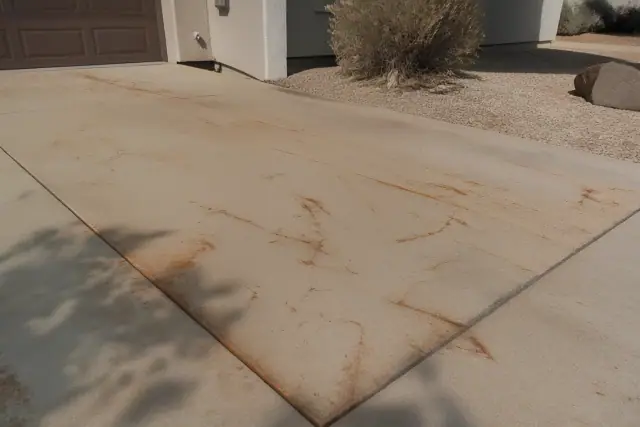
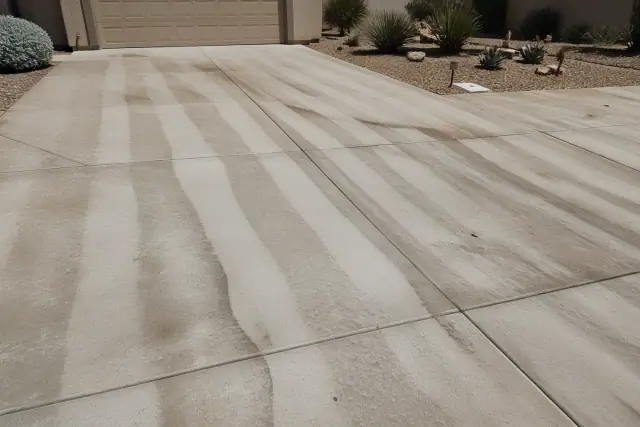
Concrete's alkaline paste and open pores make it vulnerable to chemical reactions and embedded residue. Acids dissolve and roughen the paste, metal fragments rust below the surface, soap film holds new grime, and salt-related moisture movement contributes to flaking. A harsh treatment can therefore replace a removable stain with permanent texture, color, or sealer damage.
Conditions That Change the Approach
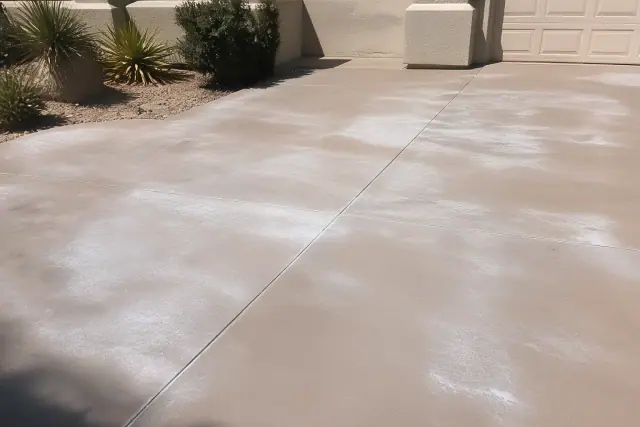
Finish, sealer condition, stain type, runoff, and exposure all affect the cleaning choice. Phoenix heat can bake oil and chemical residue into concrete during 110-degree summer weather, while roughly 300+ sunny days a year contribute to UV-faded color and sealer wear. Shaded north-facing slabs may also hold winter moisture or develop efflorescence, making acids and de-icing salts especially poor shortcuts.
Common Follow-Up Questions
For light dirt, use a pH-balanced concrete detergent or a small amount of diluted dish soap; oil, rust, algae, and efflorescence need cleaners made for those stains. Diluted bleach can address biological growth on plain gray concrete, but full-strength bleach is a poor choice for colored, stamped, or sealed finishes. Calcium magnesium acetate is gentler than rock salt when traction is necessary, though it should still be used sparingly and rinsed away. Residential sealers commonly need reapplication every two to three years, and a cleaned slab should dry fully, typically 24 to 48 hours in Phoenix's low humidity, before resealing.