Match Cleaner to the Surface
Choose pH-neutral cleaner for sealed surfaces and travertine, oxygen bleach for organic stains, diluted sodium hypochlorite for algae on bare concrete, and a calcium, lime, and rust remover for mineral scale.
At Phoenix Pressure Washers, the practical answer starts with the deck surface: bare concrete can take a diluted bleach treatment and moderate pressure, while travertine and coated decking need a pH-neutral cleaner and soft washing. Matching the cleaner and pressure to the material matters because the wrong approach can etch stone, strip sealer, remove joint sand, or damage a coating.
Choose pH-neutral cleaner for sealed surfaces and travertine, oxygen bleach for organic stains, diluted sodium hypochlorite for algae on bare concrete, and a calcium, lime, and rust remover for mineral scale.
Sound bare concrete may need 1,500-2,500 PSI for lighter buildup or 2,500-3,000 PSI for embedded dirt, while travertine and delicate coatings need soft washing under 500 PSI.
Let the correct cleaner dwell for 5-10 minutes, agitate stubborn areas with a nylon-bristle brush, and finish with a thorough fresh-water rinse kept away from the pool and storm drains.
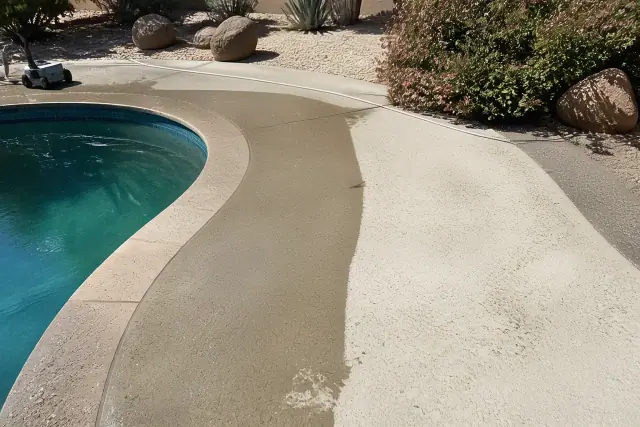
Labeled samples of bare concrete, travertine, pavers, and an acrylic-cement coating beside the cleaner suited to each surface.
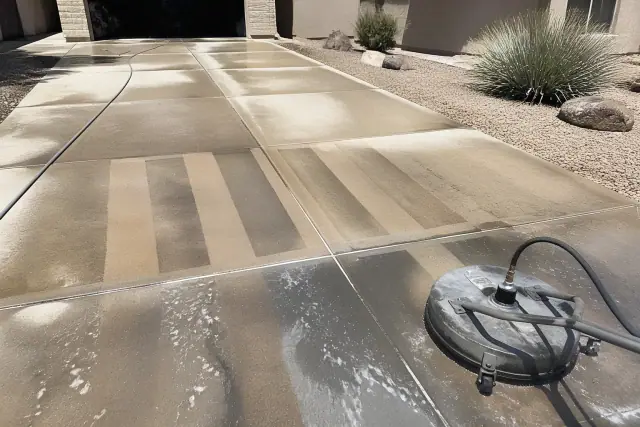
Compare a low-pressure soft wash on coated or stone decking with an even surface-cleaner pass on bare concrete.
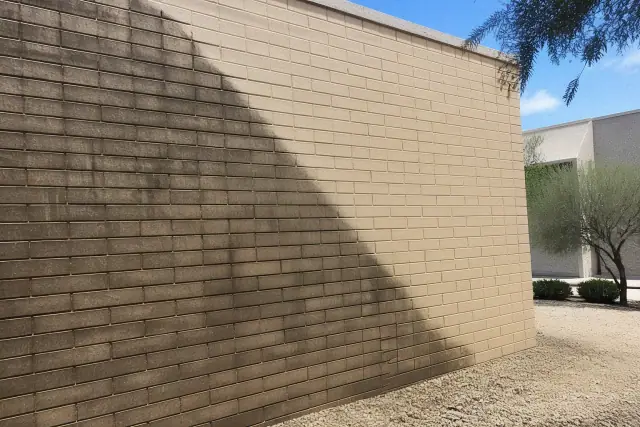
Separate rust, leaf-tannin, algae, and sunscreen stains so readers can see why one cleaner does not fit every mark.
Confirm whether the deck is bare concrete, travertine, pavers, or an acrylic-cement coating, then check its age, sealant status, and visible damage.
Use oxygen bleach for leaf tannins, a rust-specific remover for iron marks, degreaser for sunscreen residue on compatible surfaces, and diluted bleach for algae on bare concrete.
Keep pressure low on coated decking and inspect paver joints after washing; displaced polymeric sand may need replacement before a penetrating sealer is applied.
Do not use acid on travertine, wire brushes on soft coatings, generic degreasers on sealed pavers, or tips above 3,000 PSI on aging concrete; never mix bleach with ammonia.
| Pool Deck Surface | Cleaner Match | Washing Method | Main Caution |
|---|---|---|---|
| Bare concrete | Diluted sodium hypochlorite for algae; oxygen bleach for organic stains | 2,500-3,000 PSI with a surface cleaner | Use a rust-specific remover on iron stains |
| Travertine or natural stone | Non-acidic, pH-neutral stone cleaner | Soft wash under 500 PSI | Acids can etch calcium-based stone |
| Acrylic-cement coating | pH-neutral cleaner | Soft wash under 500 PSI | High pressure and wire brushes can damage the finish |
| Pavers | pH-neutral cleaner that protects sealer | Low-pressure rinse | Inspect and replace displaced joint sand |
A two-step method works for most pool decks: pre-treat with a cleaner selected for the surface and stain, then wash at material-safe pressure. For algae on unsealed concrete, source guidance ranges from about one cup of bleach per gallon for a lighter cleaner mix to around one part bleach to ten parts water for treatment; use pH-neutral cleaner instead on sealed concrete, pavers, travertine, and coated surfaces. Let the solution dwell 5-10 minutes, scrub textured areas and joints with a nylon brush, then rinse completely without directing wash water into the pool or storm drains.
Surface material, deck age, sealant condition, algae load, shade, and nearby desert landscaping all change the recommendation: a newer bare slab tolerates more pressure than a 15-year-old spalling coating. Acrylic-cement coatings used on local pool decks since the 1970s can chip under high pressure, while calcium-based travertine seen in Arcadia, Paradise Valley, and the Biltmore area can etch under acid. From July through September, monsoon moisture encourages algae in shaded sections, and hard water supplied through Salt River Project and Central Arizona Project canals leaves mineral scale. Clean early, before surfaces pass 120 degrees; concrete and coated decking can exceed 140 degrees by midday. More than 300 sunny days annually also accelerate UV wear, so cleaned pavers may need fresh joint sand and sealing every 2-3 years.
Can household cleaners work? Mild dish soap may spot-clean bare concrete, but it can leave a slick film or strip wax-based sealer, while baking soda is better reserved for small areas of light residue. Is sanding better? Not for concrete, stone, or pavers; pressure washing or soft washing removes embedded grime without treating the deck like wood. When is DIY reasonable? A small, lightly soiled residential deck may be manageable with equipment under 2,000 PSI, but natural stone, heavy staining, and large commercial decks need more consistent PSI and GPM control. Professional pool deck pressure washing typically costs $100-$250 depending on square footage.
Share the deck material, coating or sealer status, stain type, and affected area. A local pool deck cleaning professional can match the cleaner, pressure, and runoff plan to those conditions before work begins.