Yes-Garages Need Routine Cleaning
Sweeping controls loose debris, but periodic washing removes vehicle fluids, brake dust, tire residue, and fine sediment before they stain concrete, clog drains, or form slippery films.
Yes-parking garages are cleaned on recurring schedules. Phoenix Pressure Washers handles multi-level, underground, and covered garage cleaning across the Valley, where traffic, Sonoran Desert dust, staining, ventilation, and drainage affect how often and how deeply a structure needs cleaning. This guide explains the practical schedule, methods, costs, and maintenance factors.
Sweeping controls loose debris, but periodic washing removes vehicle fluids, brake dust, tire residue, and fine sediment before they stain concrete, clog drains, or form slippery films.
Vehicle volume, open-air or enclosed construction, airflow, drainage, and staining determine whether a garage needs routine sweeping, spot treatment, or a deeper wash.
Fresh oil may respond to absorbent treatment and washing, while set-in stains, textured concrete, expansion joints, and coated surfaces call for targeted pretreatment, scrubbing, or pH-balanced solutions.
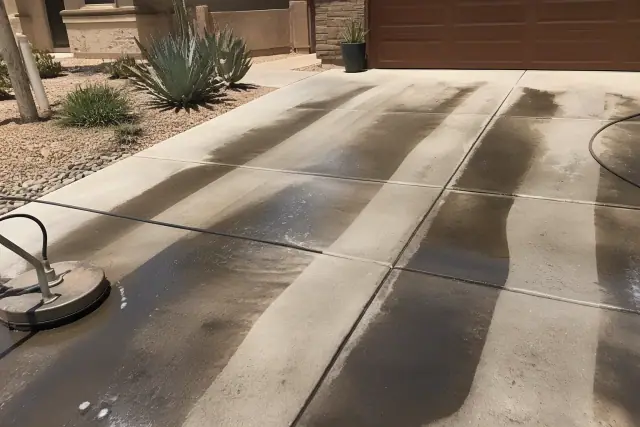
A rotary surface cleaner making even passes over a concrete drive lane. This illustrates how large slabs are washed without streaking.
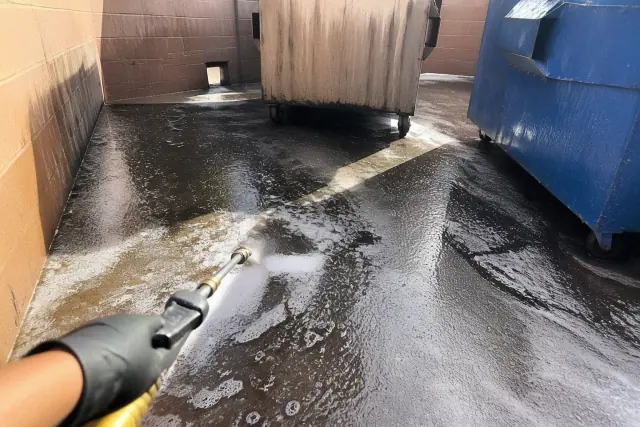
Fresh and set-in oil marks receiving targeted pretreatment before rinsing. The contrast explains why stain age changes the cleaning approach.
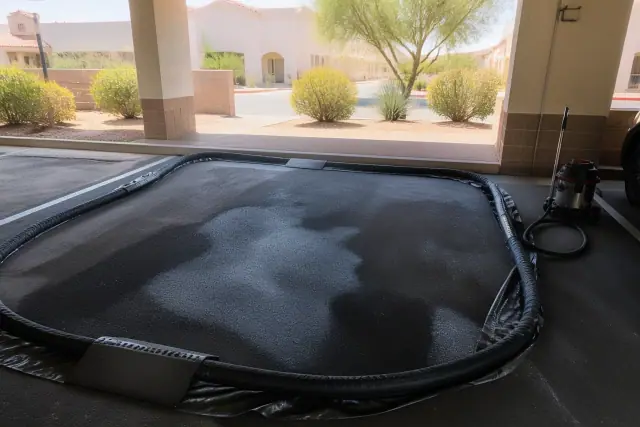
Water-reclaim equipment positioned near drains in an enclosed level. This highlights the drainage, standing-water, and ventilation planning underground cleaning requires.
Mechanical sweeping between washes keeps Sonoran Desert dust and airborne grit from grinding into concrete under tire traffic.
Motor oil, transmission fluid, brake dust, and tire rubber penetrate porous concrete over time, so older stains usually need more treatment than fresh spills.
Grease and oil may require hot-water extraction above 150 degrees Fahrenheit, while systems rated at 3,000 to 4,000 PSI and ride-on scrubbers address broad or textured slabs.
Phoenix metro commercial garages generally run $0.03 to $0.15 per square foot; open parking lots often run $0.02 to $0.10 per square foot, while a single residential garage typically falls between $100 and $300.
| Garage condition | Cleaning task | Typical timing |
|---|---|---|
| Loose dust and debris | Mechanical sweeping | Monthly |
| Fresh oil and grease spots | Targeted pretreatment | Quarterly |
| High vehicle traffic | Pressure washing or scrubbing | Every 60 to 90 days |
| Lower-traffic residential or office use | Full garage cleaning | Every six to twelve months |
| Typical full-facility maintenance | Wash drive aisles, ramps, and stairwells | Semiannually |
Garage cleaning is layered: sweeping lifts loose dust, spot treatment breaks down vehicle fluids, and pressure washing or scrubbing removes embedded residue from drive lanes, ramps, stairwells, expansion joints, and drainage channels. Removing oil, grime, and chloride residue also helps protect coatings, slow concrete spalling and rebar corrosion, reduce slippery films, and improve the property's first impression.
Vehicle volume, grease or graffiti severity, surface texture, sealant type, ventilation, and drainage access all change the scope. Open-air decks benefit from sun and airflow, while covered and underground garages require closer water-reclamation and drying plans; rooftop deicing products and tracked-in salt residue can add a corrosion concern even in Phoenix.
What causes garage stains? Motor oil, transmission fluid, brake dust, and tire rubber are common sources. Do underground garages need different methods? Yes-ventilation, standing water, drainage, and confined access change equipment and water-reclamation planning. Can cleaning help the concrete last longer? Removing oil, grime, and chloride residue before they penetrate helps protect rebar, coatings, and the concrete surface.
Share the garage size, level count, traffic pattern, surface coating, staining, ventilation, and drainage details. An on-site walkthrough can match sweeping, spot treatment, pressure washing, scrubbing, and wastewater control to the structure before work begins.